Marketing strategies for small businesses often decide whether a company grows steadily or struggles to survive. You do not need a large corporate budget to compete, but you do need smart and affordable ways to reach the right customers.
With tools like social media, email, search engines and digital marketing platforms, small companies can build strong connections without overspending. Google’s research shows that 76% of people who perform a local search on their smartphone visit a business within 24 hours, and 28% of those searches lead to a purchase.
Whether you are launching or expanding, the best marketing strategies for small businesses deliver reliable results and sustainable growth.
1. Identify Your Target Audience
Every successful campaign begins with knowing exactly who you want to reach. Effective small company marketing strategies always start with audience research.
Your target market is the broad group of people who are most likely to buy your product or service, while your target audience is a more specific segment of that group you choose to focus on for a particular campaign. For example, your target market might be small business owners, but your target audience for one campaign could be new café owners launching in their first year.
Why it matters
Marketing is more cost-effective when directed at people who need your product or service. Instead of wasting time on uninterested groups, you connect with those most ready to buy.
Ways to define your audience
- Review current customer data such as age, location and buying habits.
- Analyse competitors to see who they target and where the gaps are.
- Use surveys or interviews to hear what potential customers need, in their own words.
- Group audiences by demographics, lifestyle or behaviour, then tailor your message.
Once you understand your customers, you can build online marketing strategies for small businesses that are highly targeted and more likely to convert.
2. Define Your Unique Selling Proposition (USP)
In a competitive market, small businesses must explain why customers should choose them. A Unique Selling Proposition, or USP, is the answer.
How to develop your USP
- Focus on solving a specific customer problem or need.
- Look at how you can stand out and be more desirable than others offering similar products or services.
- Avoid generic claims like “high quality” or “excellent service.”
- Keep it short, memorable and specific.
- Prove it with testimonials, case studies or guarantees.
Working formula
“[Business] offers [product or service] for [audience] that delivers [benefit]. Unlike [competitor or alternative], we [unique advantage].”
Your USP gives structure to your marketing strategies for small businesses and guides every advert, post and campaign.
3. Understand the Problem You Solve
The best ways to market a small business involve highlighting how your product or service solves real issues. Customers are not just buying features, they are buying results.
How to uncover customer pain points
- Ask sales or support teams what problems they hear most.
- Interview customers and capture their language verbatim.
- Translate problems into outcomes. People do not just want “easy-to-swallow pills,” they want “less pain, fast.”
When your message mirrors the customer’s own words, your marketing feels authentic and persuasive.
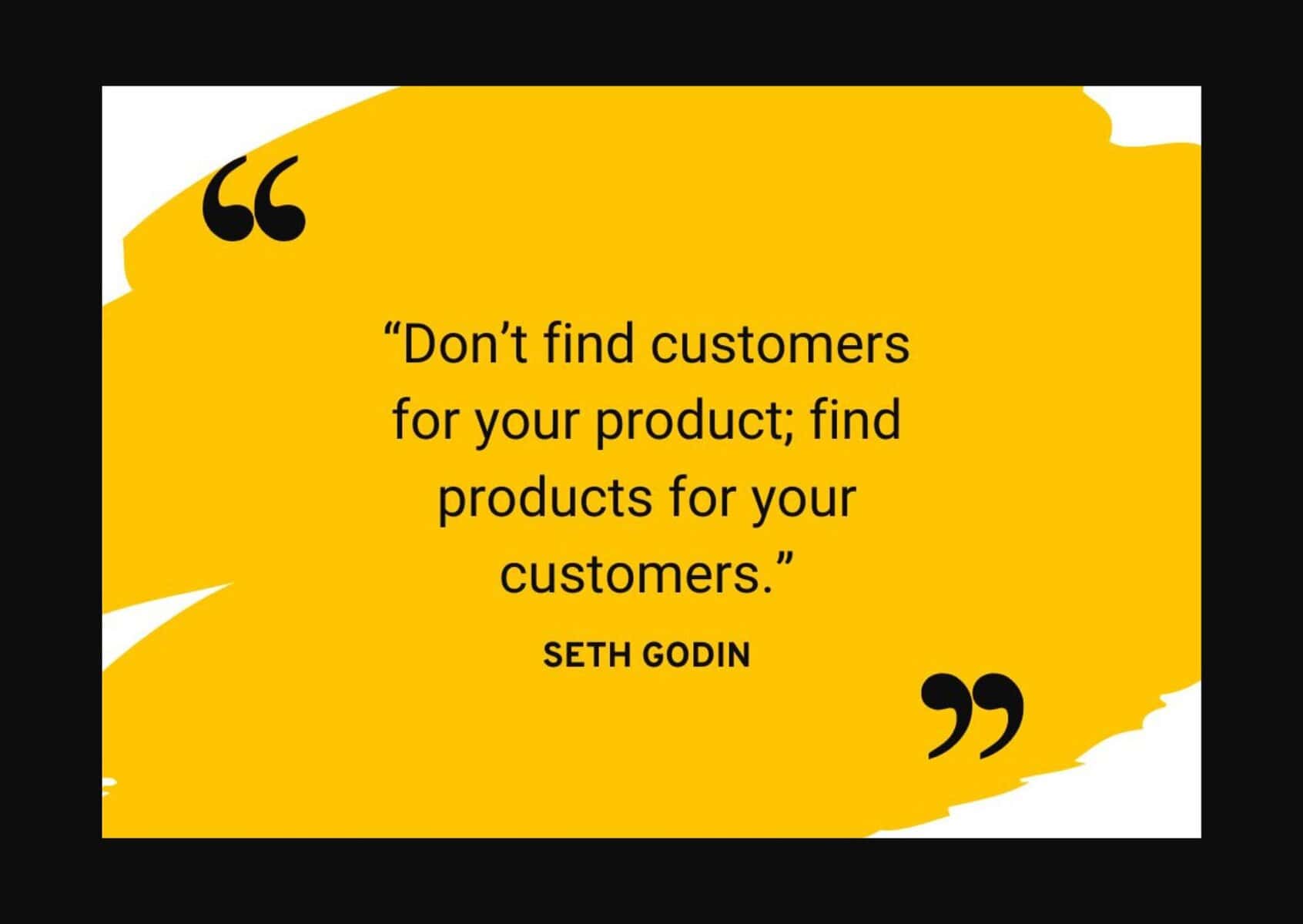
As Seth Godin says, “Don’t find customers for your products; find products for your customers.”
4. Build a Strong Brand Identity
Brand identity is more than a logo. It’s the full picture people take away from your business: your visuals, your tone of voice, your values, and how it feels to deal with you at every touchpoint. When that’s clear and consistent, you become easier to recognise, easier to trust, and easier to choose.
The definition of a “strong” brand has shifted. Polished is fine, but people are far more responsive to brands that feel real. They want to know there are humans behind the business, and they want to feel like they’ll be looked after.
Key elements of an authentic brand
- Visuals and voice (keep it consistent, keep it human)
Use the same colours, fonts and style across your website, socials and emails, but write like a person. Choose imagery that feels relatable and true to your business, not stiff or overly corporate. - Show your people
If you’re comfortable, feature the founder (you), your team, and the everyday behind-the-scenes moments. It builds familiarity and helps potential customers feel they “know” you before they buy. - Be transparent
Share what you stand for, how you work, and what customers can realistically expect. Invite feedback, respond like a human, and don’t be afraid to own mistakes. It’s one of the quickest ways to build trust.
A clear brand promise
What can someone rely on every single time they choose you? Put that into a simple, memorable promise and make sure you consistently deliver it.
Consistency helps people remember you, but authenticity is what builds long-term loyalty. If you want to go deeper on this, see my post on 7 key reasons why branding is important.
5. Create a High-Converting Website
A website is often the first impression of your business. In the world of online marketing for small businesses, your site acts as a 24/7 sales and marketing tool.
Features every small business website needs
- Mobile-friendly design that works on any device.
- Fast loading speeds. Slow sites lose visitors quickly.
- Visible contact information and trust signals, such as reviews or badges.
- Clear calls to action like “book now” or “get a quote.”
- Basic small business SEO marketing, such as optimised titles, descriptions, headings and images.
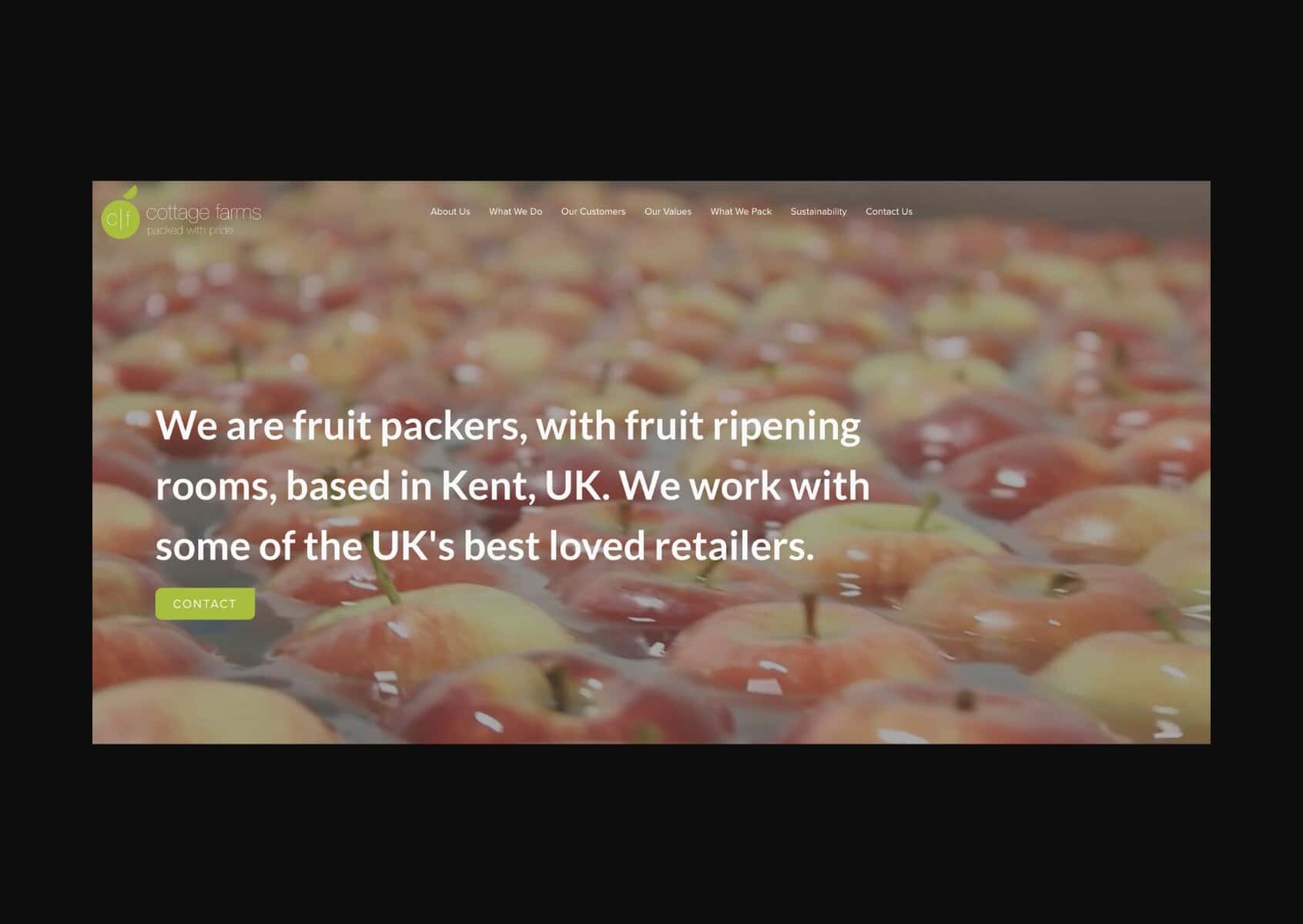
Affordable platforms like Wix, Squarespace, and WordPress allow small companies to create professional sites without major costs, with WordPress offering extra flexibility and room to grow.
6. Leverage SEO Marketing to Drive Organic Traffic
Small business SEO marketing (search engine optimisation marketing) is one of the most effective long-term strategies. It helps your site appear on Google when customers are actively searching for what you sell.
On-page SEO essentials
- Use relevant keywords naturally in headings and body text.
- Add unique meta titles and descriptions.
- Optimise images with descriptive alt text.
- Improve site speed and mobile usability.
- Consider adding a blog to your website for ongoing posts of interest and SEO power.
Off-page SEO essentials
- Build quality backlinks from relevant sites.
- Collect reviews and mentions that signal credibility.
- Keep your Google Business Profile accurate and up-to-date.
SEO takes time, but it brings consistent traffic without the constant spending on paid ads. AI tools are reshaping search, and small businesses are adapting quickly. Around 75% of SMBs are already experimenting with or implementing AI, and 71% have a defined AI strategy. While these tools offer new opportunities, the fundamentals remain the same: clear content, fast sites, and trusted links.
7. Use Email Marketing to Nurture Leads
Email remains one of the best marketing strategies for small businesses, generating one of the highest returns on investment of any channel.
How to build and segment your list
- Offer lead magnets such as guides, checklists or discounts.
- Place sign-up forms on key website pages and blog posts.
- Collect emails during in-person interactions.
- Segment lists by location, interest or behaviour for more relevant campaigns.
Best practices
- Personalise messages with names and offers that match interests.
- Keep emails short and to the point with a clear next action.
- Optimise for mobile viewing.
- Test subject lines, timing and content for improvement over time.
Email is a cornerstone of digital marketing for small companies, helping to build trust and repeat business.
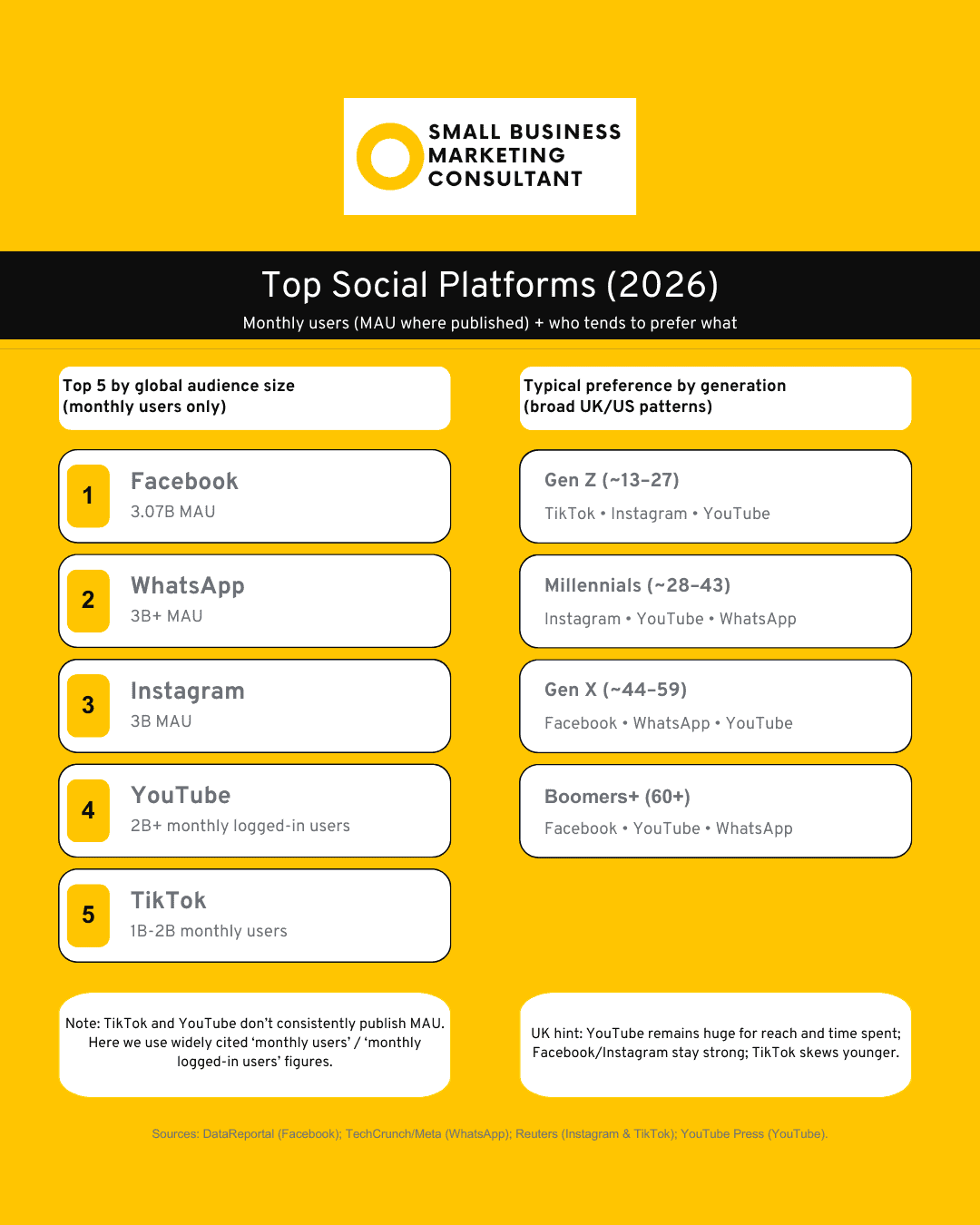
8. Engage Customers on Social Media
Social media is one of the most powerful and affordable ways to market your small business. It is no longer just a place for updates; it is a primary channel for customer research. Globally, 72.3% of internet users use social media to research brands and products before buying, and in the UK, that figure is 49.3%.
Research supports this. 46.1% of global internet users say they use social media to research brands and products before buying. Short-form video in particular drives reach and engagement. Instagram Reels attract high engagement, and video marketing delivers strong returns for many marketers.
Choosing platforms
- Facebook marketing for small businesses works well for groups, events and offers.
- Instagram is ideal for lifestyle and product-led companies. Reels help your content reach new audiences.
- TikTok reaches younger users with creative short-form videos.
- LinkedIn is effective for B2B and professional services.
Content ideas
- Share customer stories and outcomes.
- Show behind-the-scenes moments.
- Run giveaways that encourage sharing.
- Create short-form videos on Reels, TikTok or YouTube Shorts. Keep them useful, quick and human.
Authenticity and consistency work better than overly polished posts. Adding video marketing into the mix can significantly boost reach and engagement.
9. Run Targeted Paid Ads
Paid advertising helps you reach the right people quickly, especially when combined with organic strategies.
Google marketing for small businesses
- Search Ads put your business in front of people who are already searching for your products or services on Google. For example, as a marketing consultant based in Kent and offering services across the UK, if someone in Kent types “marketing consultant near me,” my ad can appear at the top of the page.
- Local Service Ads (LSAs) are available in the UK for trades like plumbers, electricians, cleaners, and roofers, with some professional services available in Greater London. They appear above normal ads, include customer reviews, and carry a Google Verified badge, which builds trust.
- Performance Max Campaigns let you advertise across Google’s entire network (Search, YouTube, Maps, Gmail, and Display). Google’s AI tests placements automatically to drive the best leads and sales, making it a useful option for UK small businesses that want visibility across multiple channels without managing lots of separate campaigns.
Facebook and Instagram ads
- Set clear objectives such as leads, traffic or sales.
- Target by demographics, interests and behaviours.
- You can start with small budgets of under £1 per day.
- Test images and copy before scaling up.
Well-targeted ads make digital marketing for small companies more precise and affordable.
10. Encourage Reviews and Testimonials
Customer reviews and testimonials are one of the most effective ways to build trust and credibility for your small business. Potential buyers want reassurance from people who have already used your services, and reviews provide exactly that.
Why reviews matter
- Reviews build social proof and influence purchase decisions.
- A steady flow of positive reviews improves local search visibility.
- Testimonials show reliability, authenticity and quality.
How to encourage reviews
- Ask happy customers to leave written reviews on your Google Business Profile or Facebook page.
- Make it easy with direct links and gentle reminders after purchase.
- Showcase video testimonials to add a personal and authentic touch. You can see examples here on my YouTube channel: https://www.youtube.com/@CatherineMcManusMarketing
Make sure you respond to every review, positive or negative. This shows professionalism and that you care about feedback.
Conclusion
The best marketing strategies for small businesses are not about big budgets. They are about focus, consistency and understanding your customers.
Start by defining your audience and USP, then create a website that converts and supports your small business SEO marketing efforts. Build an email list, use social media to connect with your community, add paid ads when you are ready to scale, and encourage reviews to build trust. When combined, these online marketing strategies for small businesses create a complete system that builds awareness, confidence and sales.
Ready for hands-on help?
If you would like expert support to plan or implement these ideas, I offer tailored marketing services for small business. Get in touch and let’s grow your business.
Frequently Asked Questions about Marketing Strategies for Small Businesses
The most effective strategies include defining your target audience, creating a unique selling proposition, building a high-converting website, using small-business SEO, running email campaigns, engaging on social media with authentic content and short-form video, testing Google and Facebook ads, and encouraging customer reviews and testimonials.
Focus on affordable marketing for small businesses. Start with SEO and Google Business Profile optimisation, publish helpful content, build an email list, engage on social media, and encourage reviews. Test small paid-ad budgets to find what works before you scale.
Small business SEO marketing helps you appear in search results when customers are actively looking for products or services like yours. Unlike paid advertising, SEO builds long-term visibility and sustainable traffic.
Social platforms are powerful ways to market your small business because people use them to research what to buy. Short-form video such as Instagram Reels and TikTok can expand reach and engagement, and video content often delivers strong ROI.
Yes. Google marketing for small businesses captures high-intent searches, while Facebook and Instagram ads let you target specific audiences. Start with modest daily budgets, test variations and scale the best performers.
Reviews provide social proof, increase local visibility and build trust through authentic user-generated content. Written reviews on Google Business Profile and Facebook are valuable, and video testimonials add credibility and personality. Responding to all reviews shows you value feedback.
Sources
- Seth Godin, “You don’t find customers for your products. You find products for your customers.” Blog post: https://seths.blog
- Think with Google, Local Search Insights. “76% of people who search on smartphones for something nearby visit a business within a day, and 28% of those searches result in a purchase.” https://www.thinkwithgoogle.com
- DataReportal, Digital 2025 Global Overview Report. “46.1% of internet users use social media to research brands and products.” https://datareportal.com
- Socialinsider, Instagram Video Formats Study. Findings indicate Instagram Reels achieve higher engagement than regular video posts. https://www.socialinsider.io
- Wyzowl, State of Video Marketing 2024. Majority of marketers report positive ROI from video. https://www.wyzowl.com
Salesforce 2 Small & Medium Business Trends, 6th E.
salesforce.com, 20263 Stats Defining Social Media in 2026. socialmediatoday.com, 2026
Digital 2026: Internet users pass 6 billion, social media users become a ‘supermajority’…
marcommnews.com, 2026Getting started with Local Services Ads – United Kingdom – Local Services Help.
support.google.com, 2026